

Social Media

Copyright 2026 Adele Nguedia. All Rights Reserved

Introducing social features on R-NET

R-net is a centralized enterprise news hub. Despite serving a workforce of more than 85,000 employees, many articles on the R-net platform received only a few hundred daily visits on average which meant important news did not always spread thoroughly.

400%

increase in daily article viewership within the first 30 days

600K+

interactions in the first 30 days

Overview

My Role:
Lead Product Designer
Front-end Developer

The challenge was to increase traffic to R-net while giving leadership a clearer picture of what content resonated most with employees. With only page views to rely on, there was no meaningful way to understand what people found useful, what sparked conversation, or what encouraged them to return.

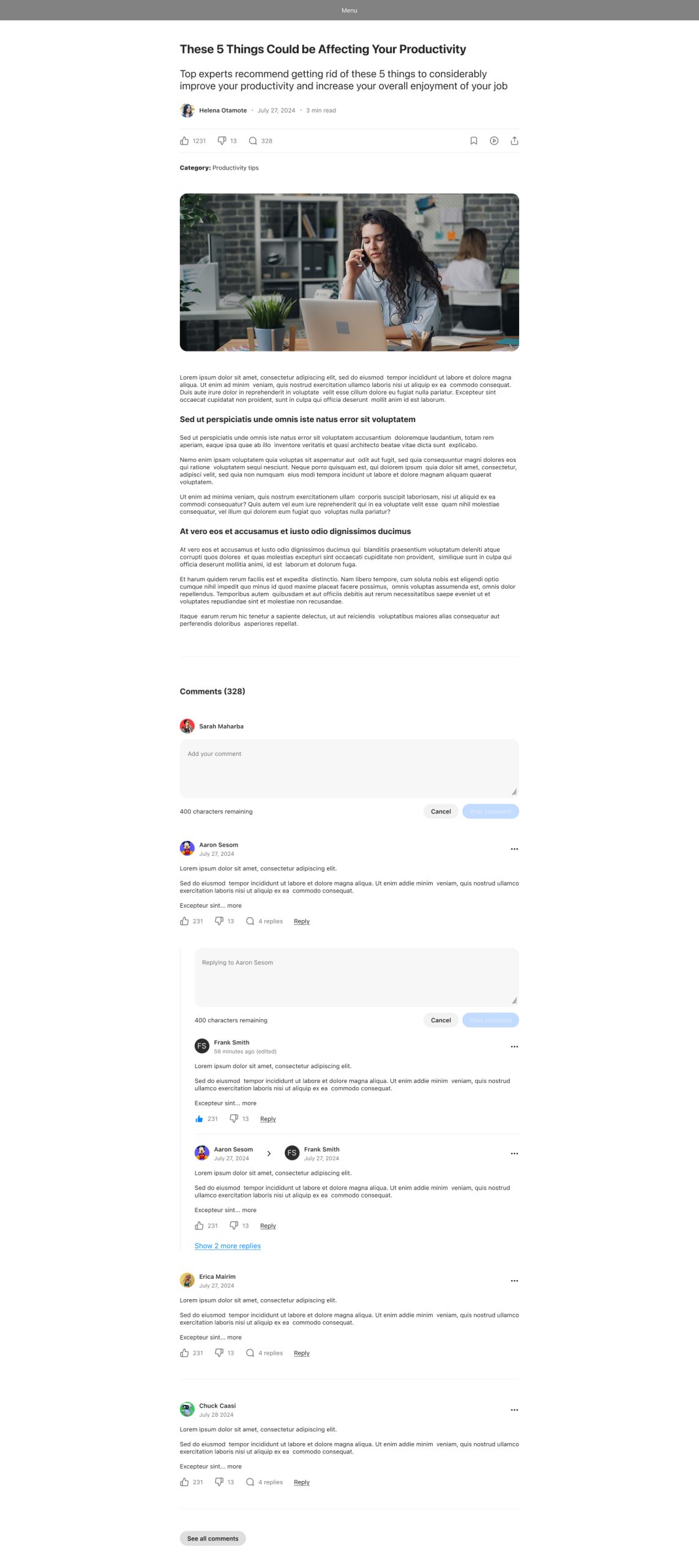
I pondered how social and community platforms such as Reddit, Facebook, and other content products create these signals through participation, and used those patterns to rethink R-net. I led the design and front-end implementation of the new experience, introducing reactions, discussions, sharing, and bookmarking features. Within 60 days of launch, average article readership increased more than 4×.

Single blog post with social features
Research & Discovery

Before proposing solutions, I wanted to understand why participation was low.

Employee interviews:
I spoke with employees across different departments to understand how often they visited R-net, what made an article worth reading, and what influenced whether they shared or returned to it. I also explored where employees went when they wanted to discuss company news.

Surveys:
I used surveys to broaden the research beyond individual interviews and identify patterns across the larger employee population. This helped validate assumptions around platform awareness, reading habits, content preferences, and reasons for returning to the platform.

Stakeholder discussions:
I met with content teams, internal communications, business stakeholders, and department leaders to understand how R-net fit into their communication strategy, what information they wish they had and how they currently assessed the success of content.

Feature ideation discussions:
I brought cross-functional teams together to explore potential ways to increase participation and create better feedback loops. We considered both employee-facing opportunities and the signals that would be useful to authors, content teams, and leadership.

Content performance reviews:
I reviewed existing article performance to understand readership patterns and look for relationships between content, publishing behavior, and engagement. This gave us a baseline for measuring the impact of any changes we introduced.

Competitive analysis:
I explored social and community platforms such as Medium, Reddit and Facebook, focusing on patterns that encourage people to interact with content. This helped inform how social features like reactions, discussions, sharing, and bookmarking could translate to R-net.

During research and discovery, the following questions were explored:

  • Are employees aware the platform exists?
  • What motivates someone to read an article?
  • Why don’t employees return to R-net often?
  • Where do discussions currently happen?
  • What information do authors wish they had?
  • How should leadership measure content success?
Key Findings

The research pointed to a bigger opportunity than simply getting more people to read articles.

Employees wanted a voice

Many participants described reading articles they found useful but having no way to respond within the platform itself. Even simple actions such as acknowledging a helpful article required moving to external communication tools.

People read articles, they just discussed them elsewhere: Employees frequently shared article links through company chat applications and discussed them privately. The content generated discussion, but the platform captured none of it.

Some employees wanted low-effort ways to participate

Not everyone wanted to leave a comment or start a discussion. Some people just wanted quick ways to acknowledge or respond to content without having to write a response.

Participation should not feel like a task: Some employees expressed that they didn’t always want to stop and think of a thoughtful response in the moment, but that they’d like a way to signal interest and even come back to the article at a later time.

Authors and leadership needed better signals

Success was measured primarily through traditional metrics such as page views and time spent reading each article. While these metrics indicated whether content had been opened, they failed to answer more important questions that could guide authors.

They needed to understand whether content was understood, appreciated, debated, shared, or acted upon: Without direct feedback mechanisms, understanding employee sentiment required separate surveys, anecdotal feedback, or manual outreach.

The Opportunity

How might we give employees a voice, bring discussion into R-net, and create better feedback signals?

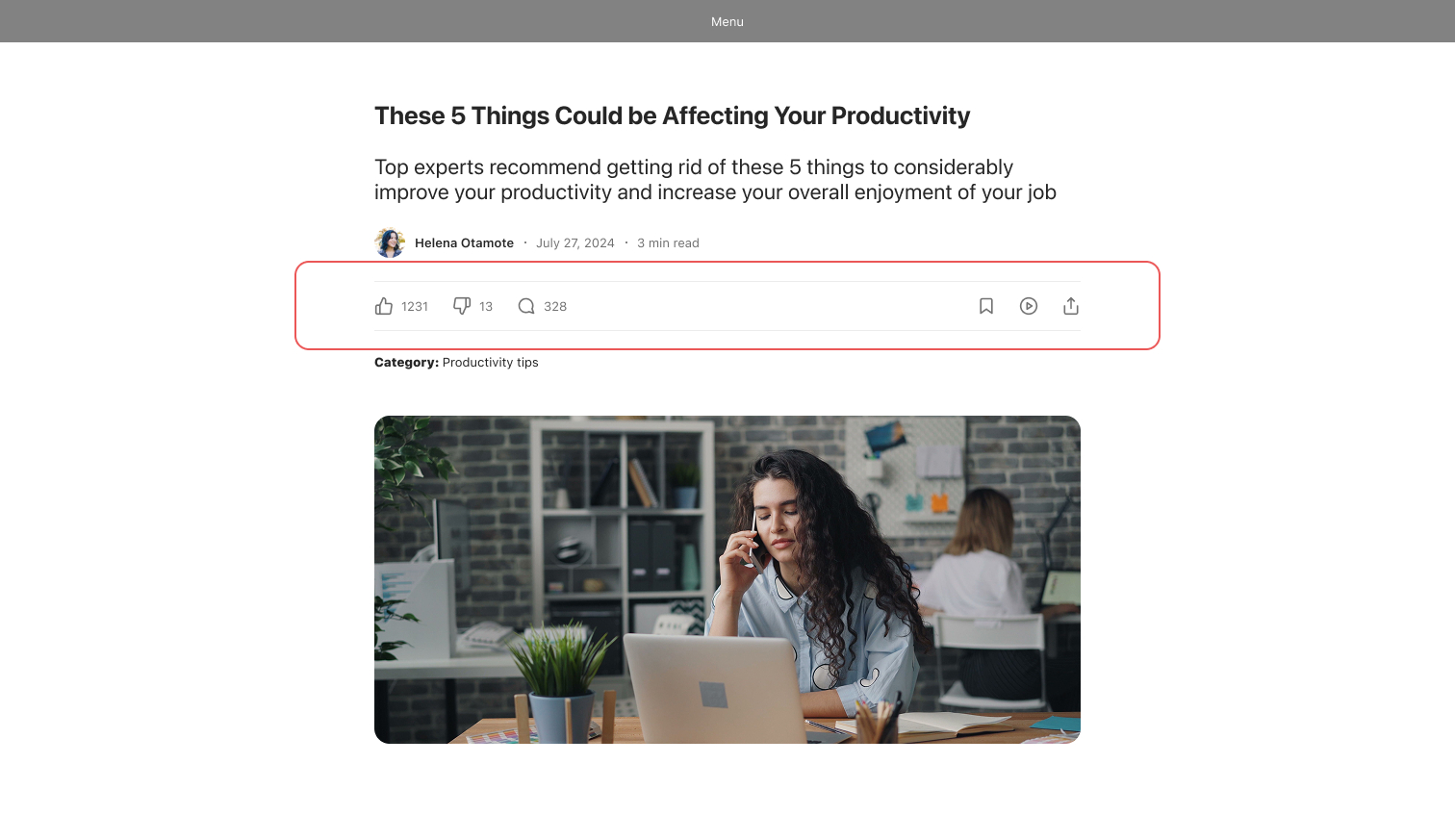
blog post showing social actions

Engagement actions

I added engagement actions including: “like/dislike”, “comment”, “bookmark article” and “share article” to encourage participation, even for users who did not want to write a comment. There was also a “listen” action for users who prefer audio over reading. These interactions provided immediate feedback while reducing friction for employees who preferred passive participation.
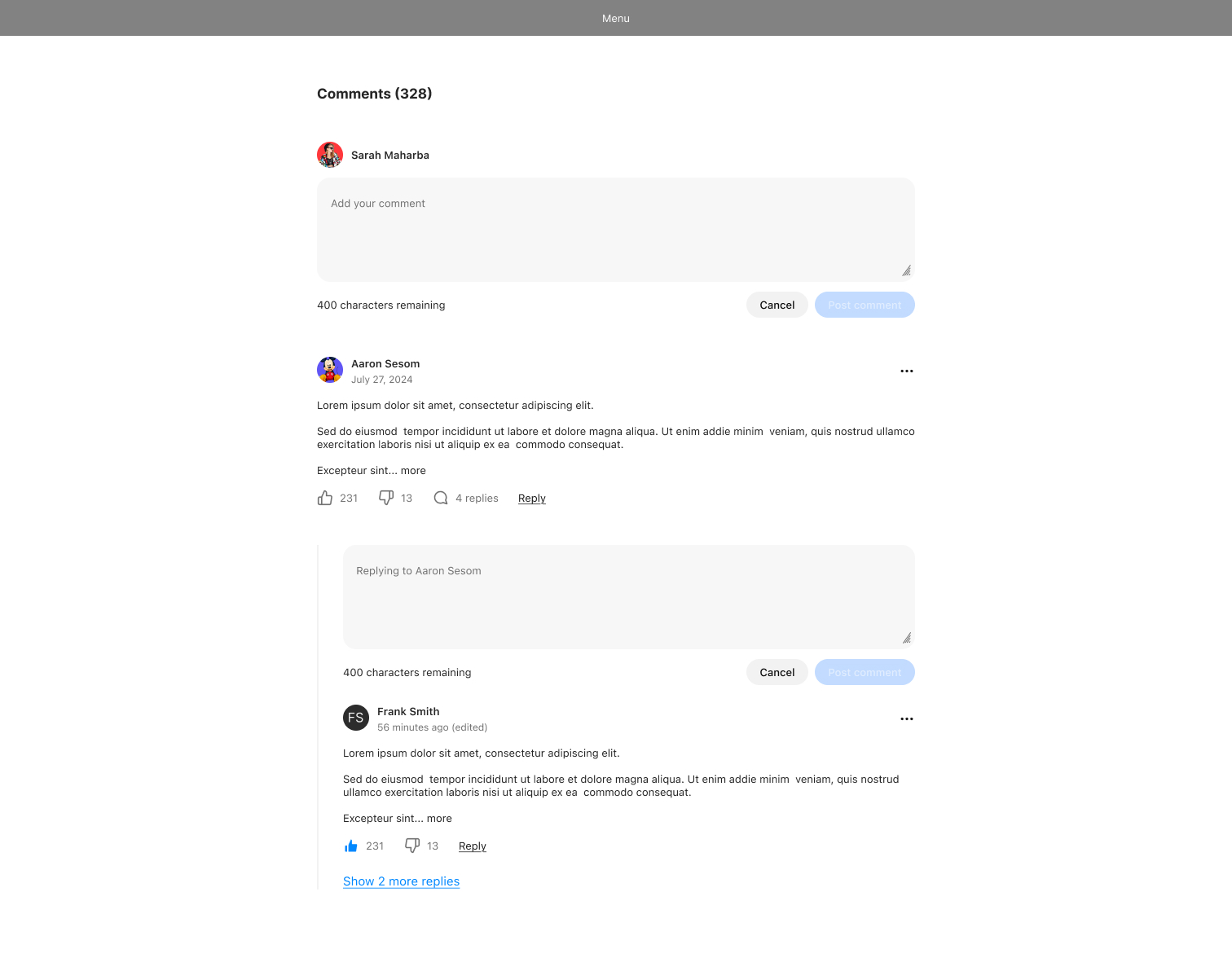
Blog post comment section

A comment engine for enterprise scale

The centerpiece of the project was a custom comment engine that allows users to share their thoughts about an article and interact with others’ comments to keep the conversation going. Comments were intentionally limited to 400 characters to encourage concise contributions and improve discussion readability and moderation.
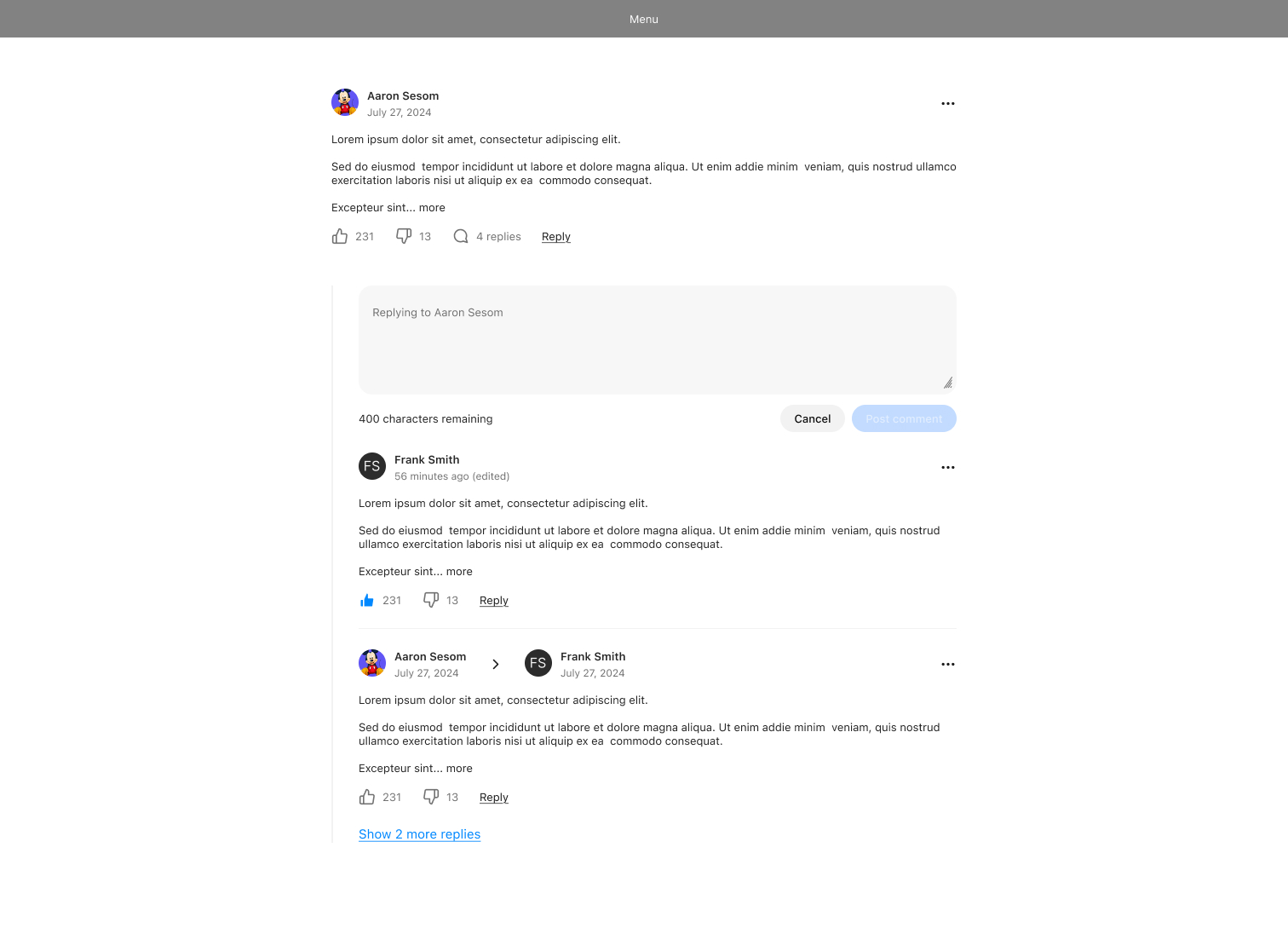
Comment nesting

Conversations architecture

One of the most interesting design challenges involved comment threading. While flexible, deep thread structures can easily become difficult to follow, especially in large communities. Conversation threads were intentionally limited to a single visual level of nesting. Replies adopted a pattern commonly used in modern social platforms where instead of introducing additional indentation levels, replies explicitly referenced the intended recipient.

This allowed users to understand who was being addressed while keeping the interface visually flat and easy to scan. The result combined the clarity of shallow threads with the contextual richness of deeper conversations.
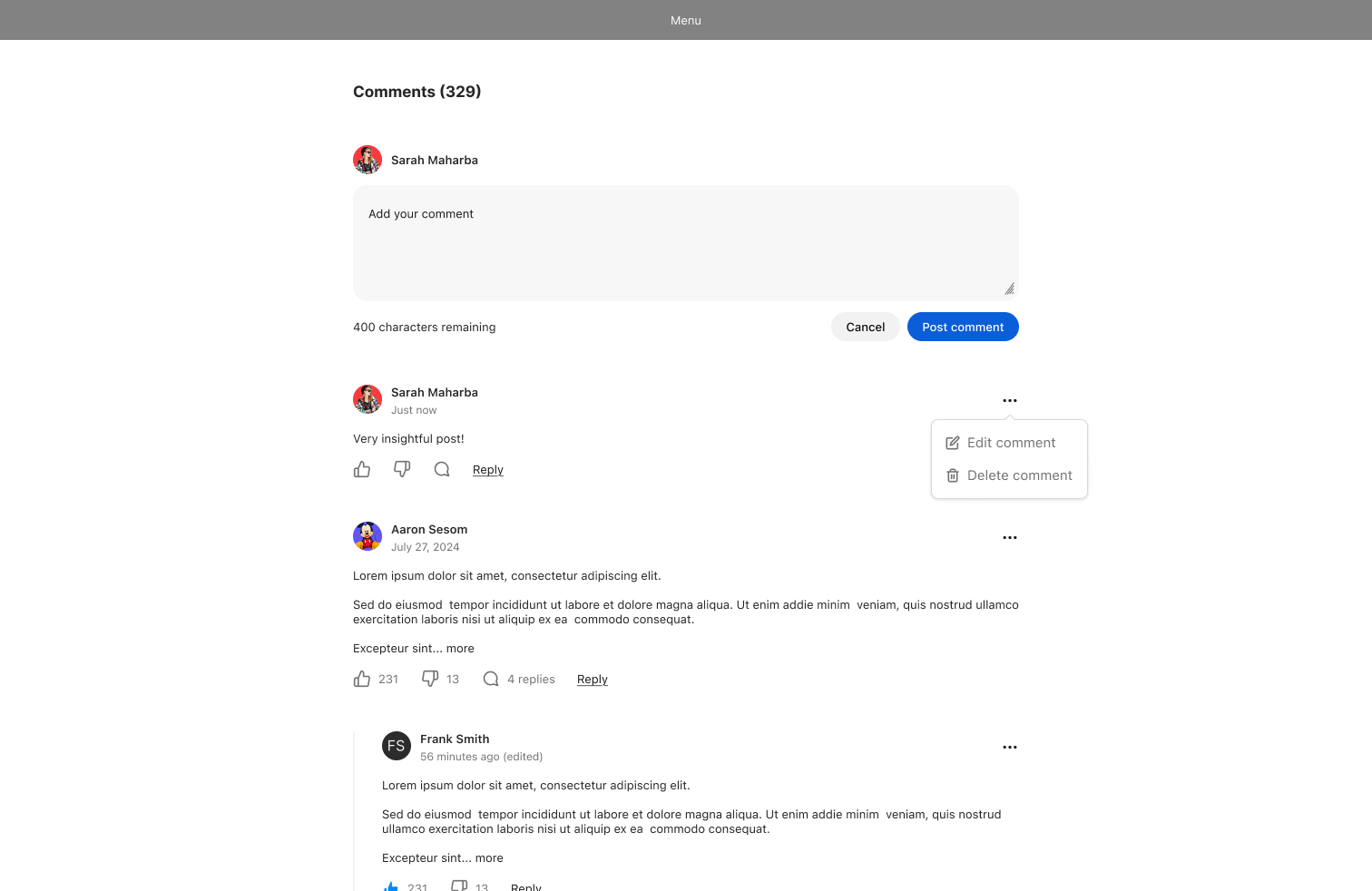
Editing and deleting comments

It was important to give users the ability to edit or delete their comments. This was a safeguard that let people change or remove comments posted by accident, while also reducing anxiety around having to leave the perfect comment.
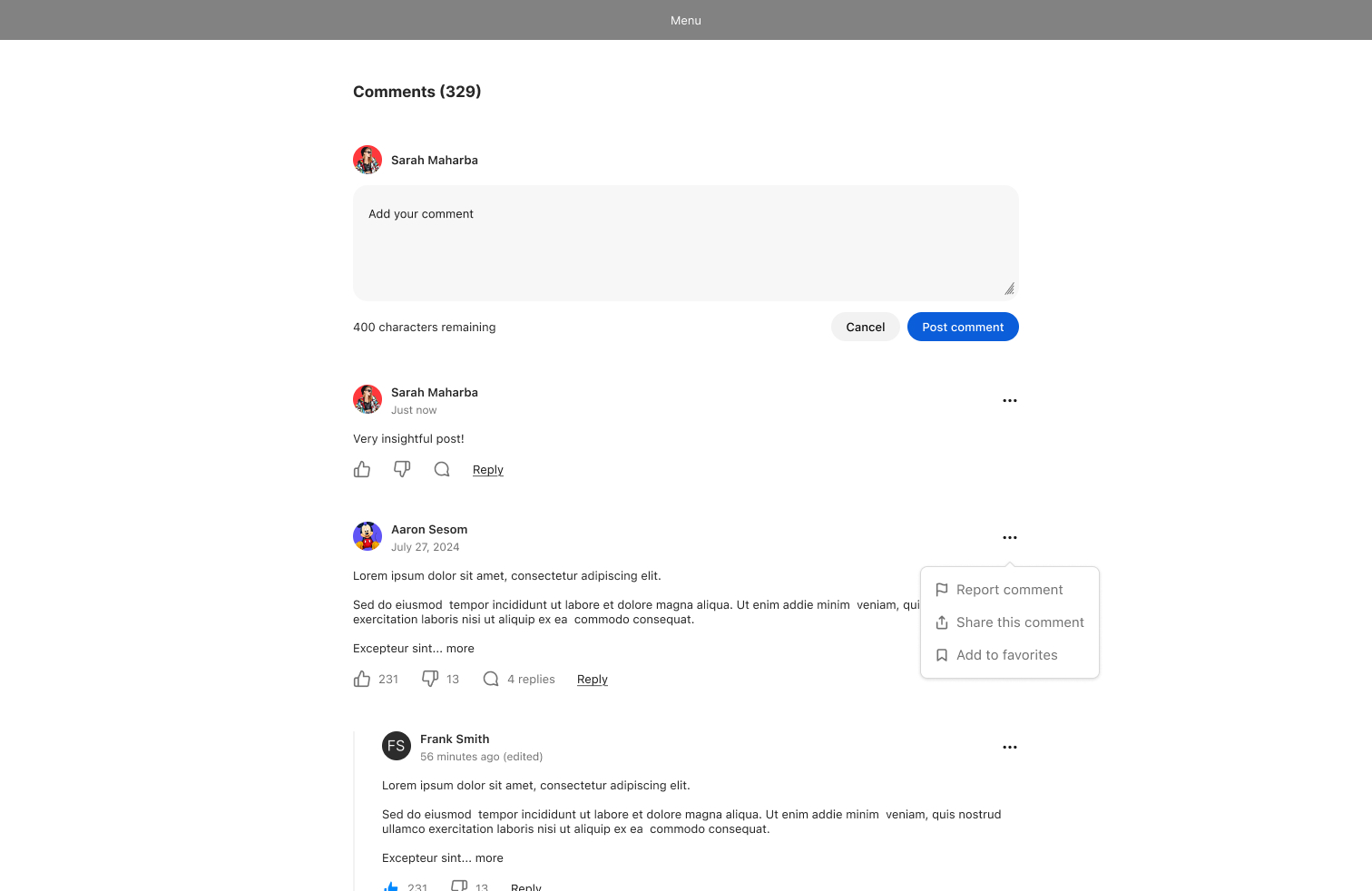
Blog post action - others' comments

Moderation and governance

Introducing participation within an enterprise environment required thoughtful safeguards that balanced openness with professional workplace expectations. Every reader could report a comment, and moderators had the ability to review flagged comments and delete them whenever necessary.

This gave the organization a way to address inappropriate content while still allowing employees to participate openly.
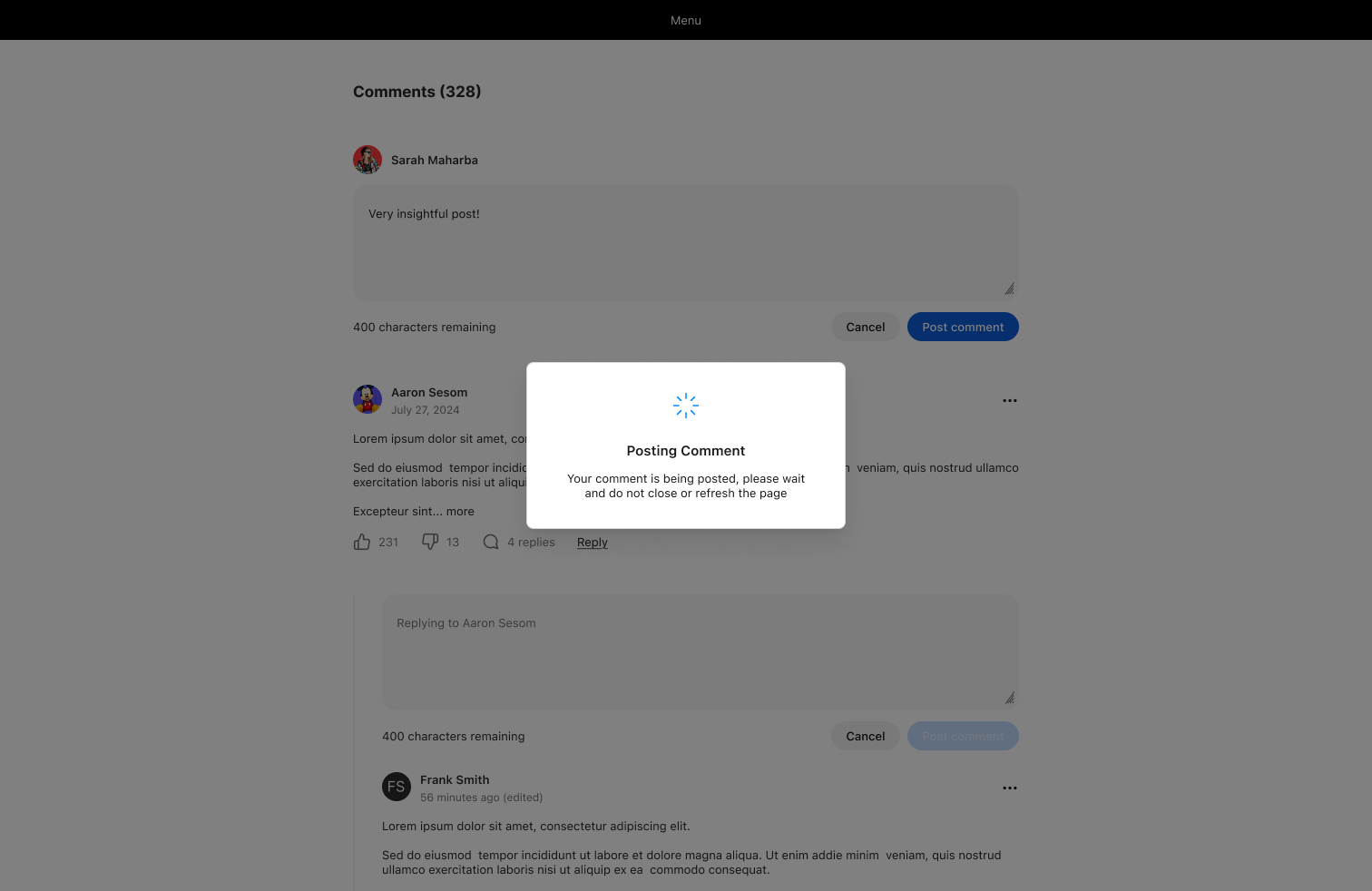
Blog post - posting comment

Preventing duplicate submissions

To prevent users from accidentally posting the same comment multiple times (especially when connectivity was poor), we added clear feedback to let them know when their comment was being posted, if an error occurred, or if the comment was successfully posted.
Three principles guided the solution, each addressing a challenge that was unveiled during the research and discovery phase.

Lower the barrier to participation

Not everyone wants to write a comment, but that doesn’t mean they don’t have something to contribute. Participation should feel lightweight and possible with a single click, so anyone can engage with an article without having to overthink.

Long-term engagement

The goal was not just to generate activity around an article, but to encourage conversations that could continue over time. Employees should feel encouraged to revisit and share content.

Create actionable feedback

Interactions should generate useful signals that help authors and leadership make better decisions around content, and R-net as a platform.

Results

The platform experienced substantial growth across both readership and participation.

Content reach:
Within the first 30 days, average daily article visits increased from approximately 300–400 views per article to more than 1,200 views per article.

Increased return visits:
Employees returned to the platform more frequently as discussions and interaction history gave them more reasons to revisit content. Articles became destinations for ongoing conversations rather than one-time reads.

Increased participation:
For the first time, employees could actively contribute to conversations around company content rather than consuming information passively. This shifted the platform from a primarily publishing-focused experience toward one that supported active participation.

Better content decisions:
Authors and leadership gained direct visibility into which topics resonated, which articles generated discussion, and what employees wanted more of. These signals provided a continuous source of employee feedback, allowing future content decisions to be informed by employee behavior rather than assumptions.

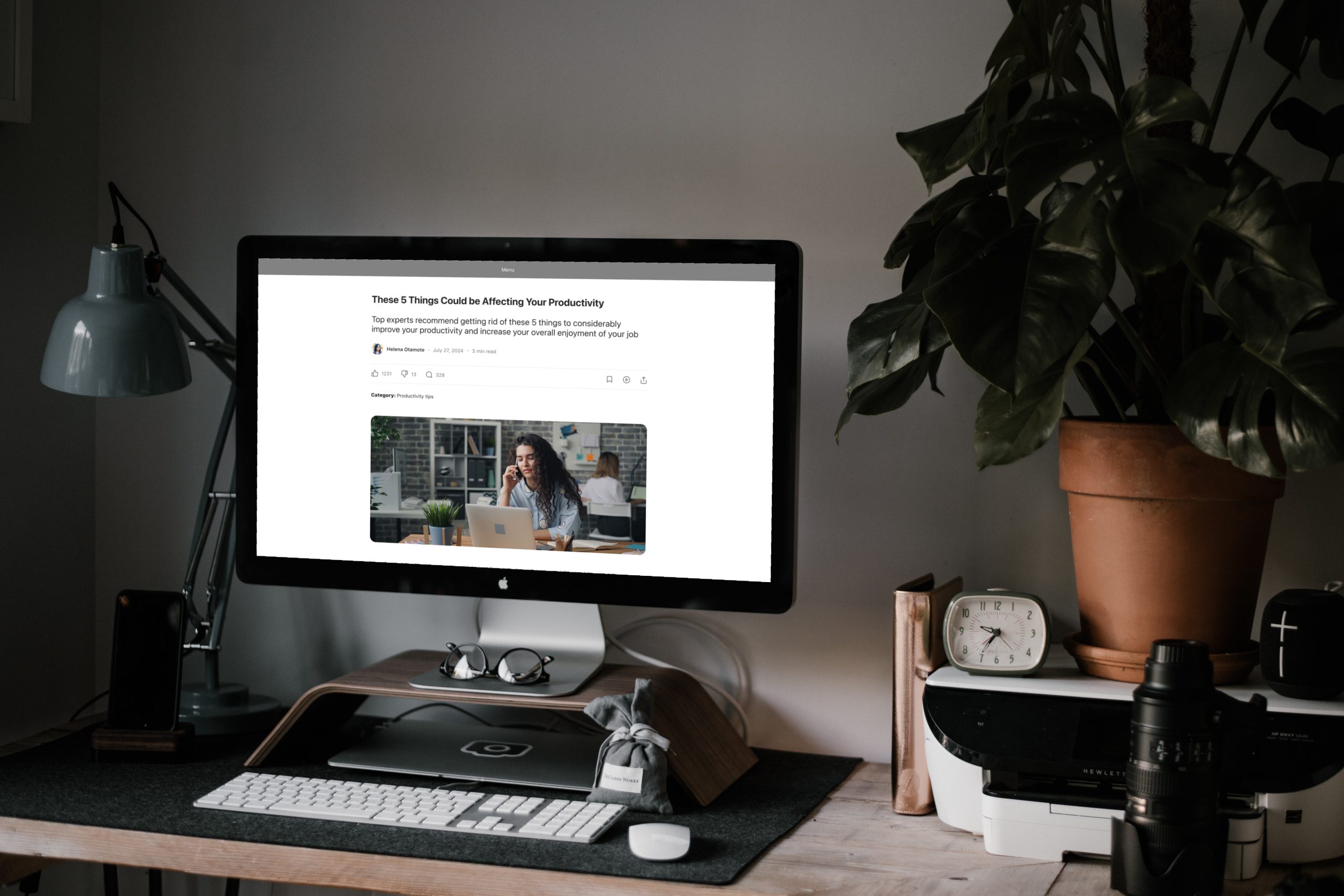
Rnet - Single blog post mockup
Privacy Settings
We use cookies to enhance your experience while using our website. If you are using our Services via a browser you can restrict, block or remove cookies through your web browser settings. We also use content and scripts from third parties that may use tracking technologies. You can selectively provide your consent below to allow such third party embeds. For complete information about the cookies we use, data we collect and how we process them, please check our Privacy Policy
Youtube
Consent to display content from - Youtube
Vimeo
Consent to display content from - Vimeo
Google Maps
Consent to display content from - Google