
Social Media

Copyright 2026 Adele Nguedia. All Rights Reserved

WIC Admissions System Redesign

WIC’s admissions process relied on multiple tools, manual handoffs, and repeated data entry, creating long wait times for students and significant operational strain for admins.

5x

faster application completion time

95%

increase in admin efficiency

6x

more completed applications

Overview

Project Manager
Product Designer
UI/UX Researcher
Front-end Developer

I led the end-to-end redesign of WIC’s student admissions process: from online student application to eligibility evaluation and application feedback. We simplified the registration process for students, streamlined the administrative workflow for reviewing, managing, and processing applications, and significantly reduced operational cost, all while maintaining trust and fairness.

I led the project, working across product, design, research, development, and stakeholder management.

Research
& Discovery

Woman working on a laptop at a cafe

01

Stakeholder interviews

I interviewed leadership, marketing, and admissions staff to understand the business goals, operational requirements, and day-to-day operations and challenges. I also shadowed 4 administrators over 5 business days, documenting how applications moved through the process and the workarounds they had developed to keep things moving. This revealed where the biggest delays, handoffs, and manual work were happening.

02

User research

We interviewed 20+ applicants, including people who completed the process and people who abandoned it. We completed the registration process multiple times both as applicants and administrators, timed each step, mapped every system involved, and documented everything. This helped us understand their experience and where expectations broke down.

03

Workflow Mapping

With our findings, we were able to map every step from registration through eligibility evaluation, including the systems involved, data entry, hand-offs, and workarounds. This helped distinguish UI problems from problems in the underlying process, and created a solid foundation for deriving a working scalable solution.

Our Findings

WIC’s existing workflow relied on too many disconnected tools

Fragmented workflow:
The process moves students and data across different tools, increasing errors, data loss, abandoned submissions, and risk of interception by malicious actors.

Repeated data entry:
Students entered the same information multiple times, while admins had to sort through and reconcile data from different sources.

Long processing times:
Students spent 45–60 minutes across multiple sessions to complete their applications, and admin review took several weeks, creating large backlogs and frustration for both students and admins.

Heavy manual workload:
The process relies very heavily on human input for application progress, evaluation and feedback. Relying on humans for every step increases the likelihood of mistakes.

4800+

applications waiting to be processed

52.5min

application completion time over multiple days (students)

90min

application processing time, spread over multiple weeks

100+

student application status inquiries per day

1000s

of dollars spent monthly on various tools

No

established system for sharing application status

2.3%

conversion rate from visitor to basic form

43%

conversion rate from basic form to eligibility form

Design Goals

How would we simplify the system end-to-end to reduce friction for both admins and students

Make the registration process easier for students

Reduce friction in the registration process so students can complete their applications quickly and with as little hassle as possible.

Help admins process student applications faster

Increase application processing efficiency, as well as accuracy in the decision-making process, while preserving trust and maintaining fairness in key decision points.

Reduce operational cost and data risk

Make the student registration and application evaluation process cost-efficient, reliable and easy to scale, while maintaining data integrity

Leading a cross-functional team to build a scalable system

The project began as a UI redesign, but research quickly revealed that the registration interface was only part of the problem. I led the team through workflow mapping, wireframing, prototyping, testing, and stakeholder validation to redesign the underlying admissions process.

To avoid disrupting ongoing operations, we built and tested the new system in a sandbox before deployment. After several iterations and rounds of testing, we launched with little to no downtime.

Planning the student registration portal
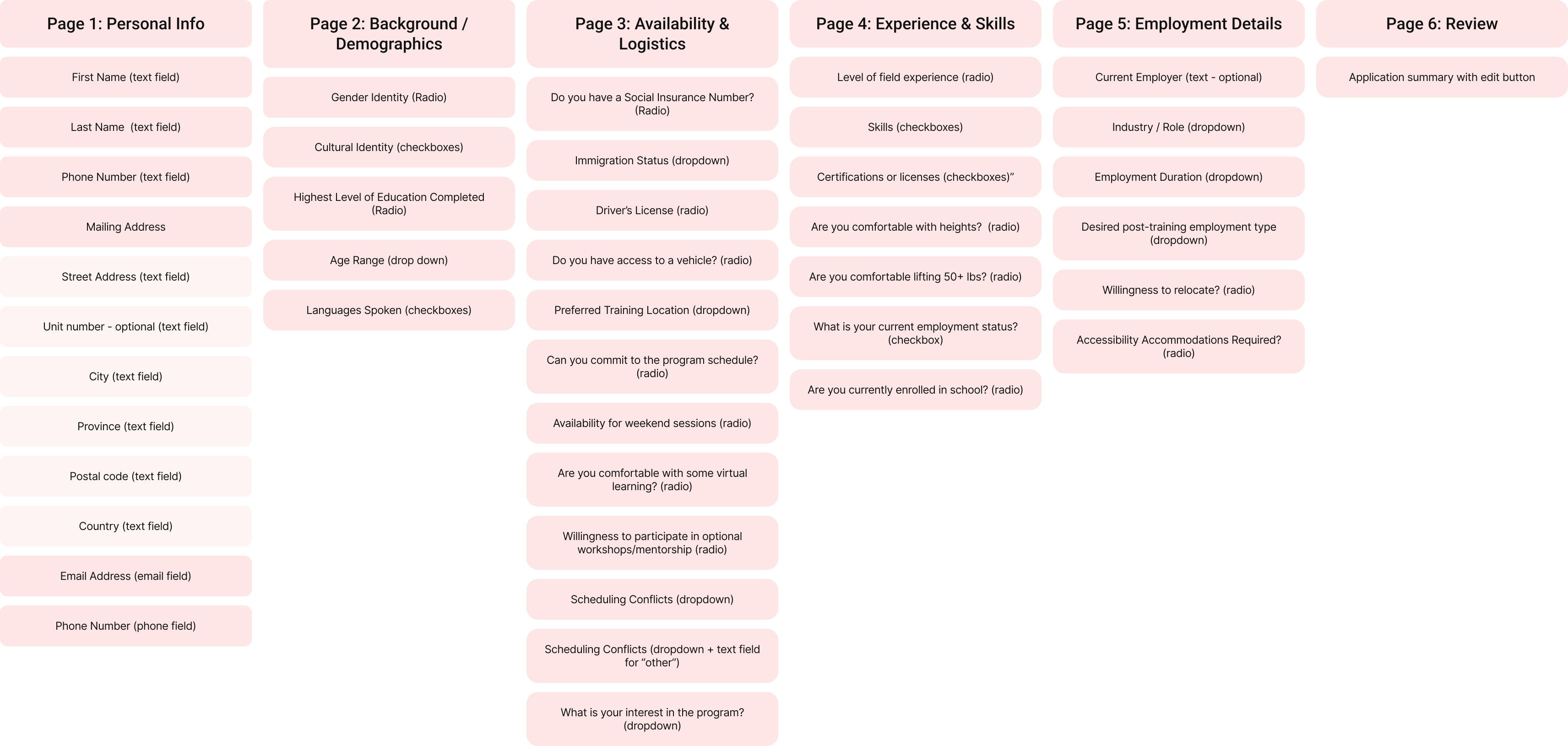
Student registration flow planning

Restructuring responses to facilitate automated evaluation*

Note: These restructured questions and options came as a result of multiple interviews with program admins and leadership to make sure that we captured all the information needed to make decisions.
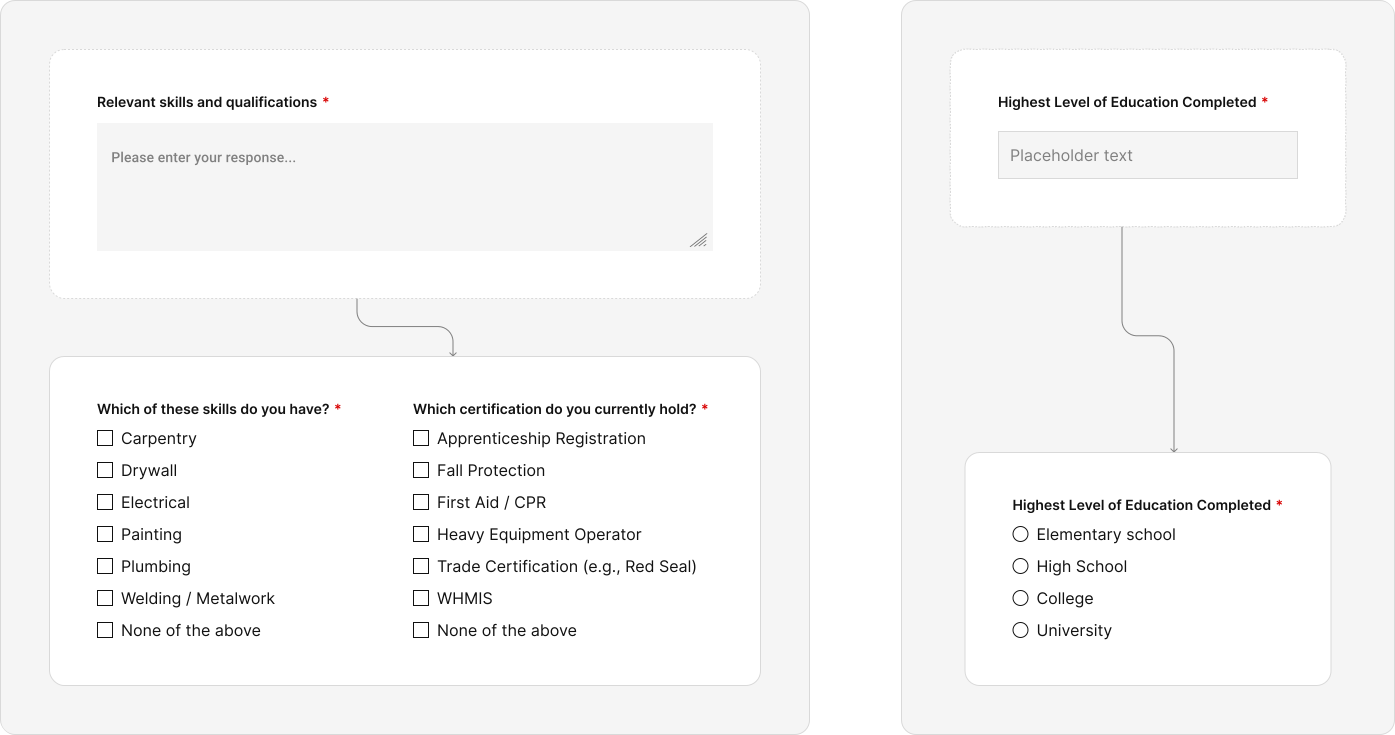
Structured responses
First Outcome

A clearer, more reassurring experience for students

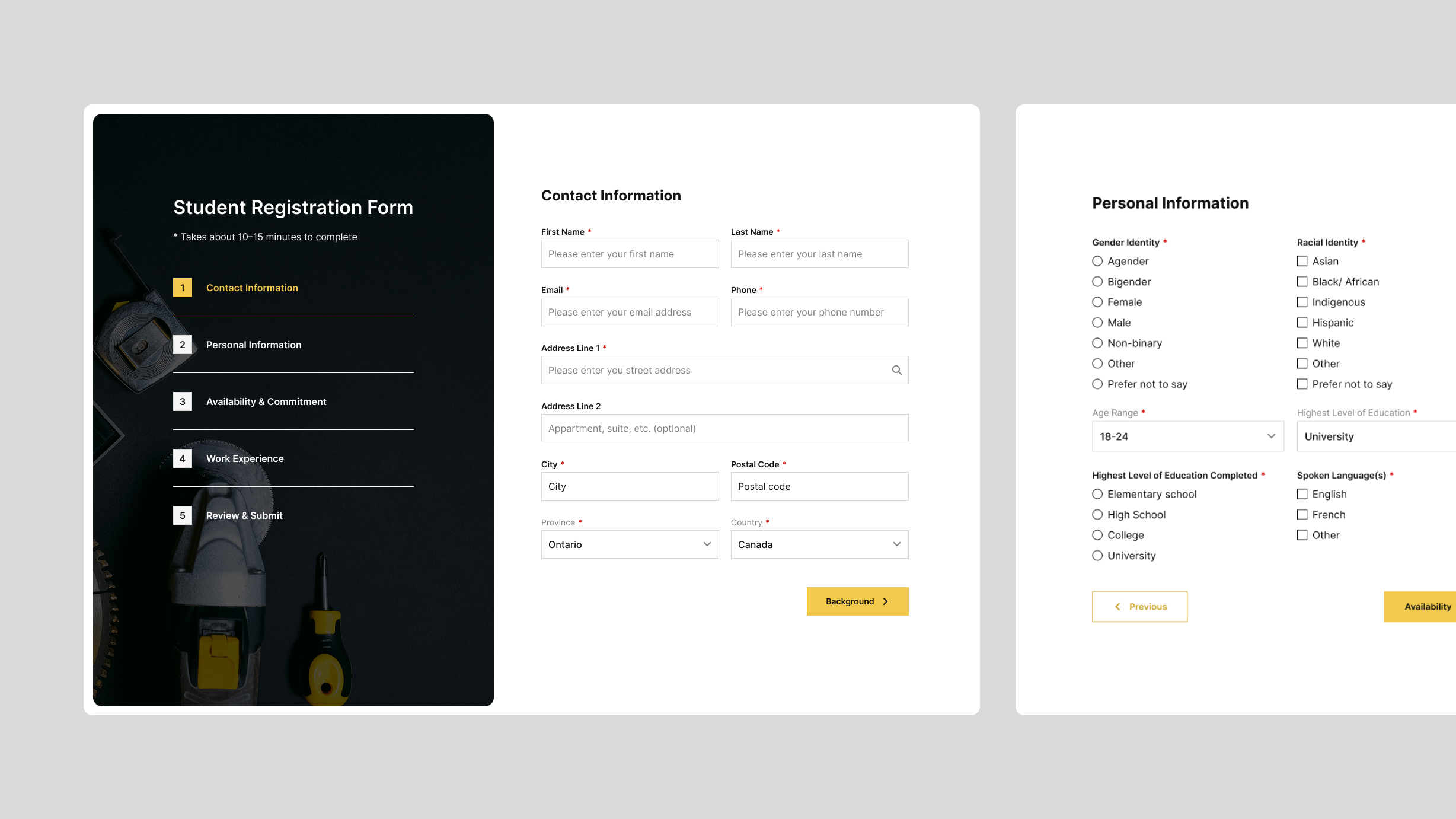
Student multistep form

A streamlined process with structured responses

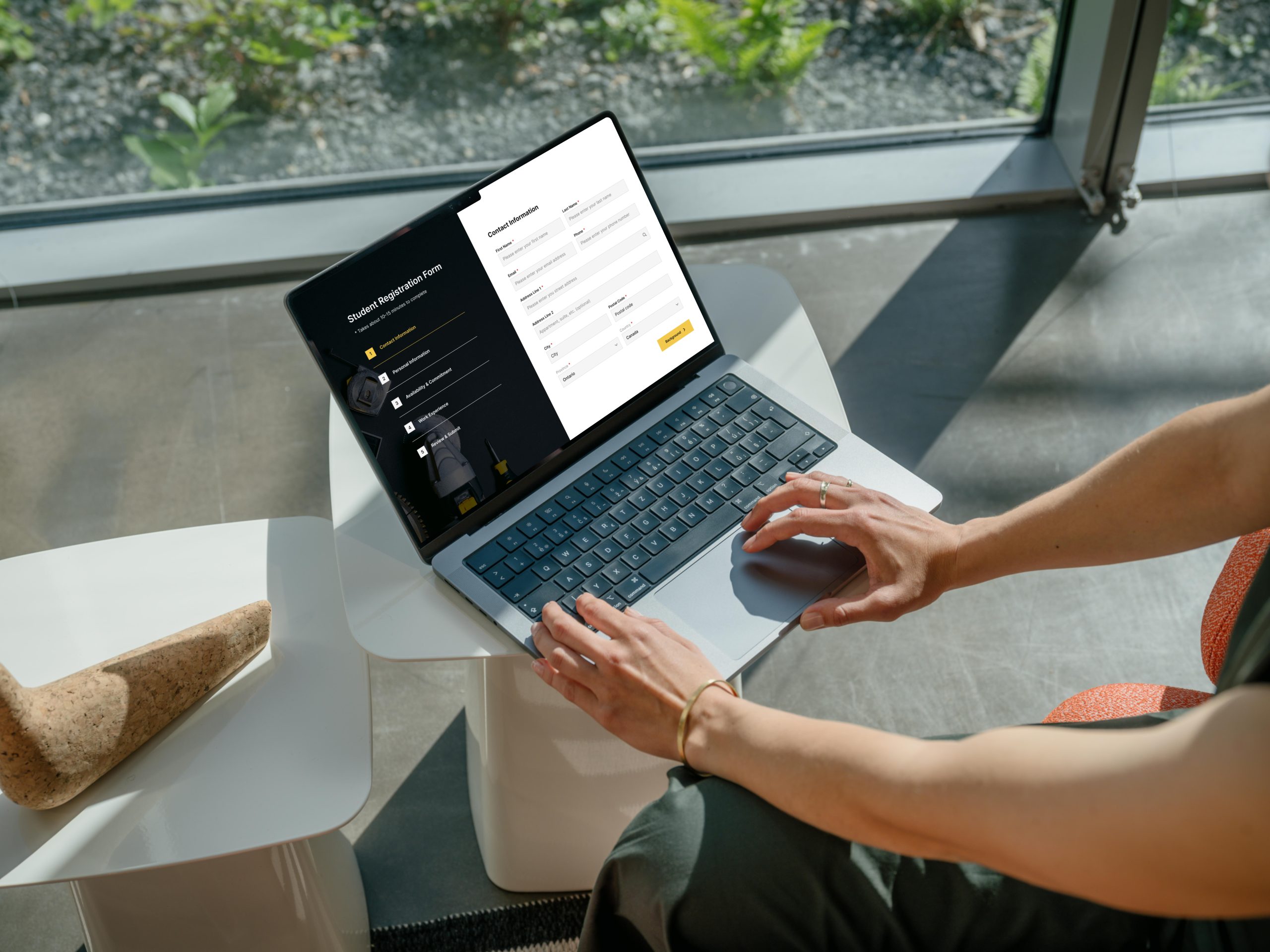
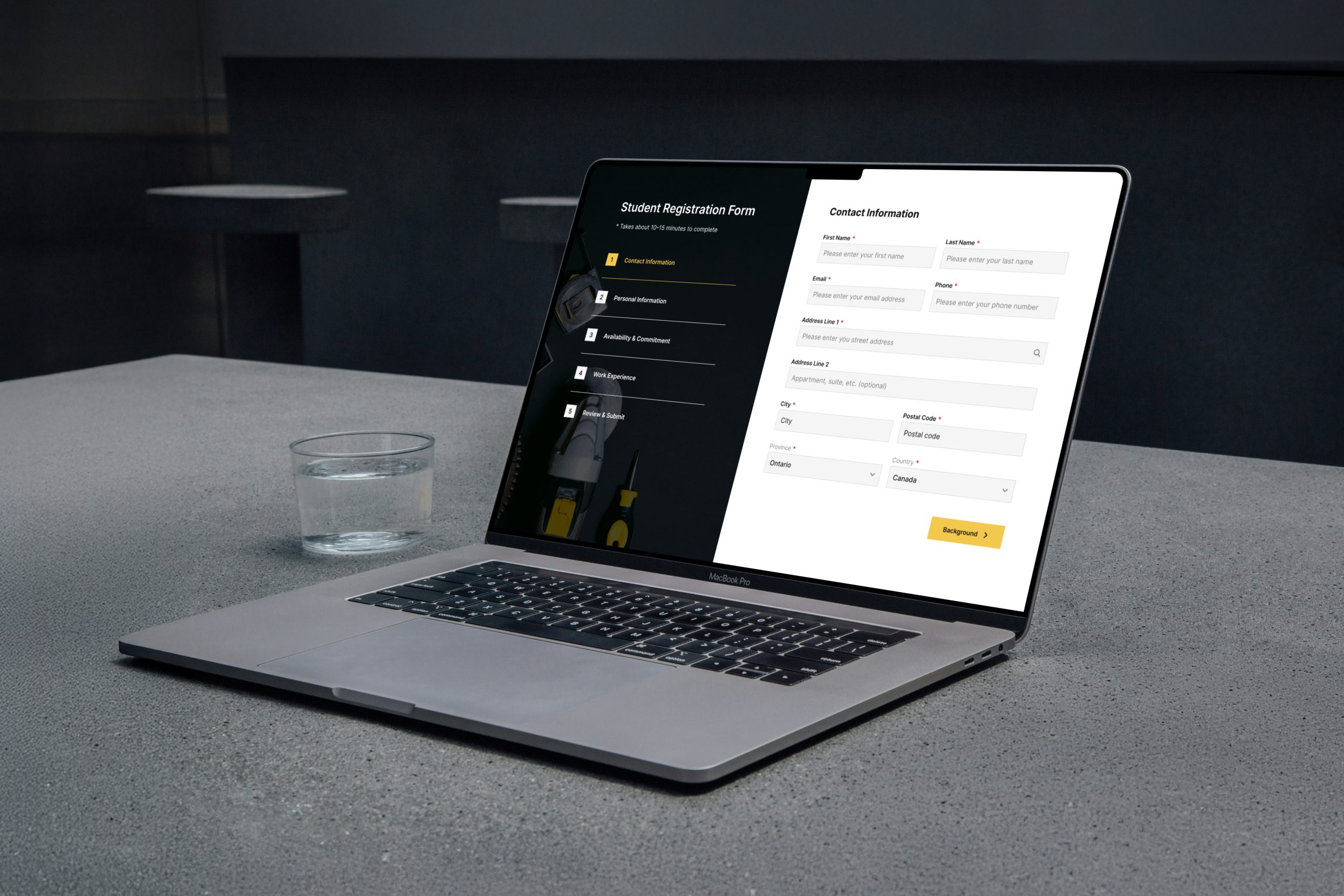
The application is contained in one streamlined flow, with related information grouped into manageable steps to reduce cognitive load. We also replaced open-ended questions with structured response options, making the form easier to complete while giving admins cleaner, more consistent data to process.
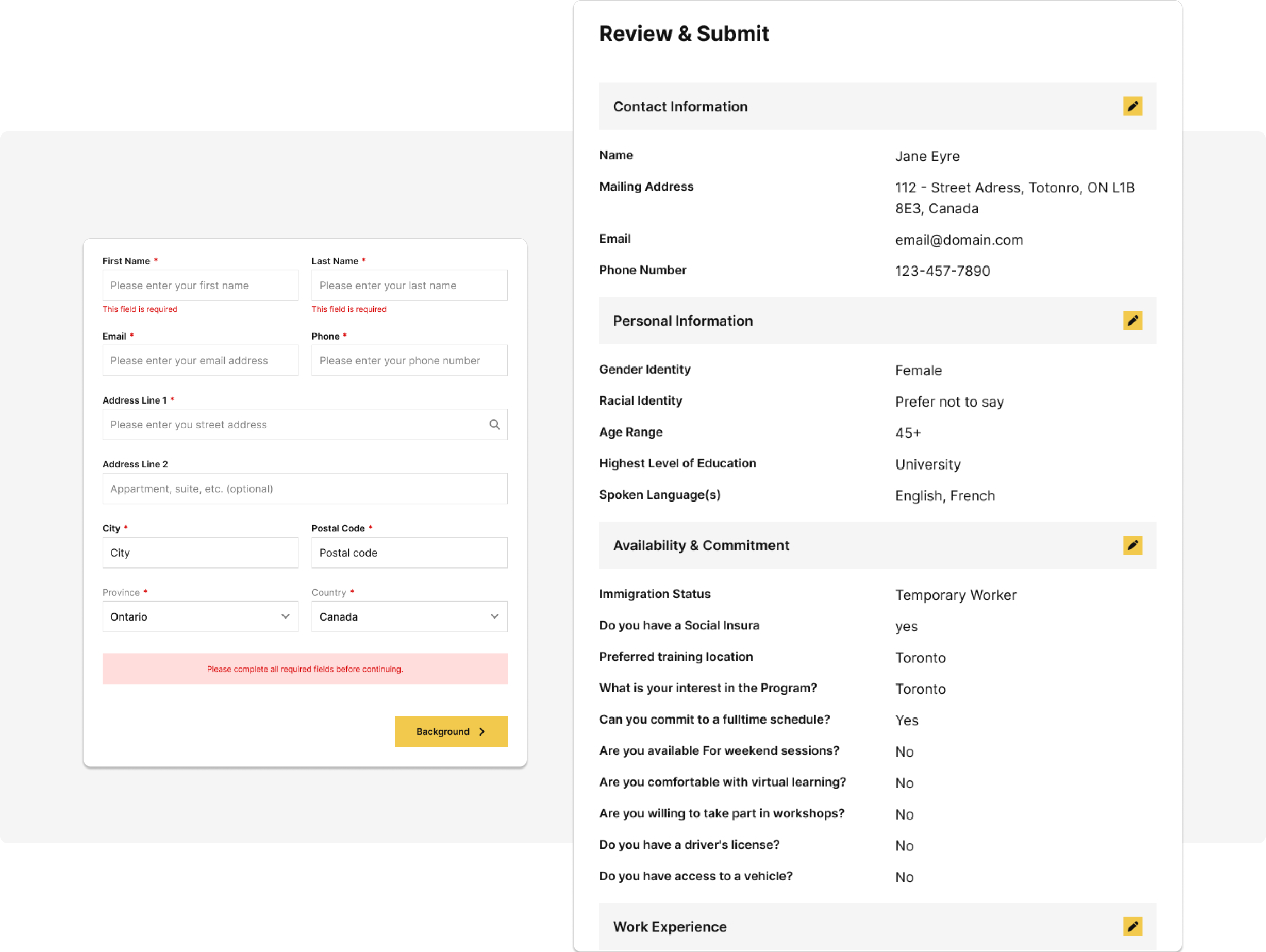
on-page feedback

Better feedback and correction mechanisms

Students receive clear validation and error states as they complete each step. They can move freely between steps, review their information, and correct mistakes before submitting. This helps alleviate stress about mistakes and gives them confidence that their application is complete and accurate.
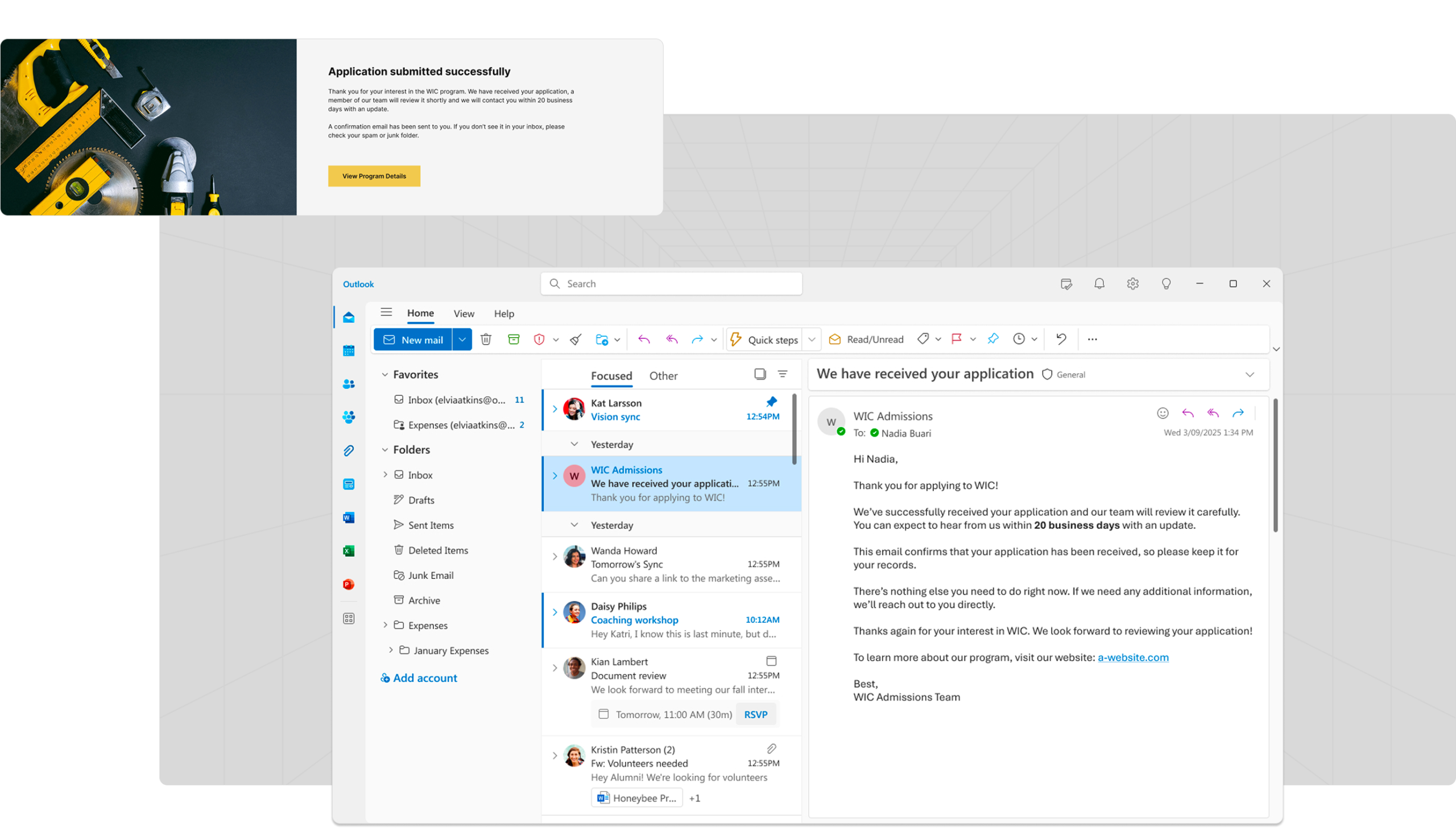
Application submission feedback

Immediate confirmation

A clear confirmation screen appears immediately after submission, followed by an almost-instant email receipt confirming that the application was successfully received and will be reviewed. This removes the uncertainty for the students about whether their applications were successfully submitted.
Students went from navigating multiple forms and waiting for admin follow-up after each step, to being able to complete their application in one streamlined 10-15 mins session.

5x faster application completion

Because there are now fewer steps, fewer redirects and clearer expectations, application completion time has dropped from 45–60 minutes across multiple days–weeks, and multiple platforms to 10–15 minutes in one session and on a single platform.

Over 95% less status inquiries

The number of “did you get my application” emails dropped from 200+ weekly to less than 10 as students receive immediate on-page and email confirmation.

Increased trust

Because there are fewer platforms involved in the process and fewer drop-off points, students now feel more confident they are not at risk of scams, and they trust the application process more. 

Second Outcome

Easier application evaluation, communication and data management

Admin dashboard and notifications

Application processing efficiency has increased by 95%

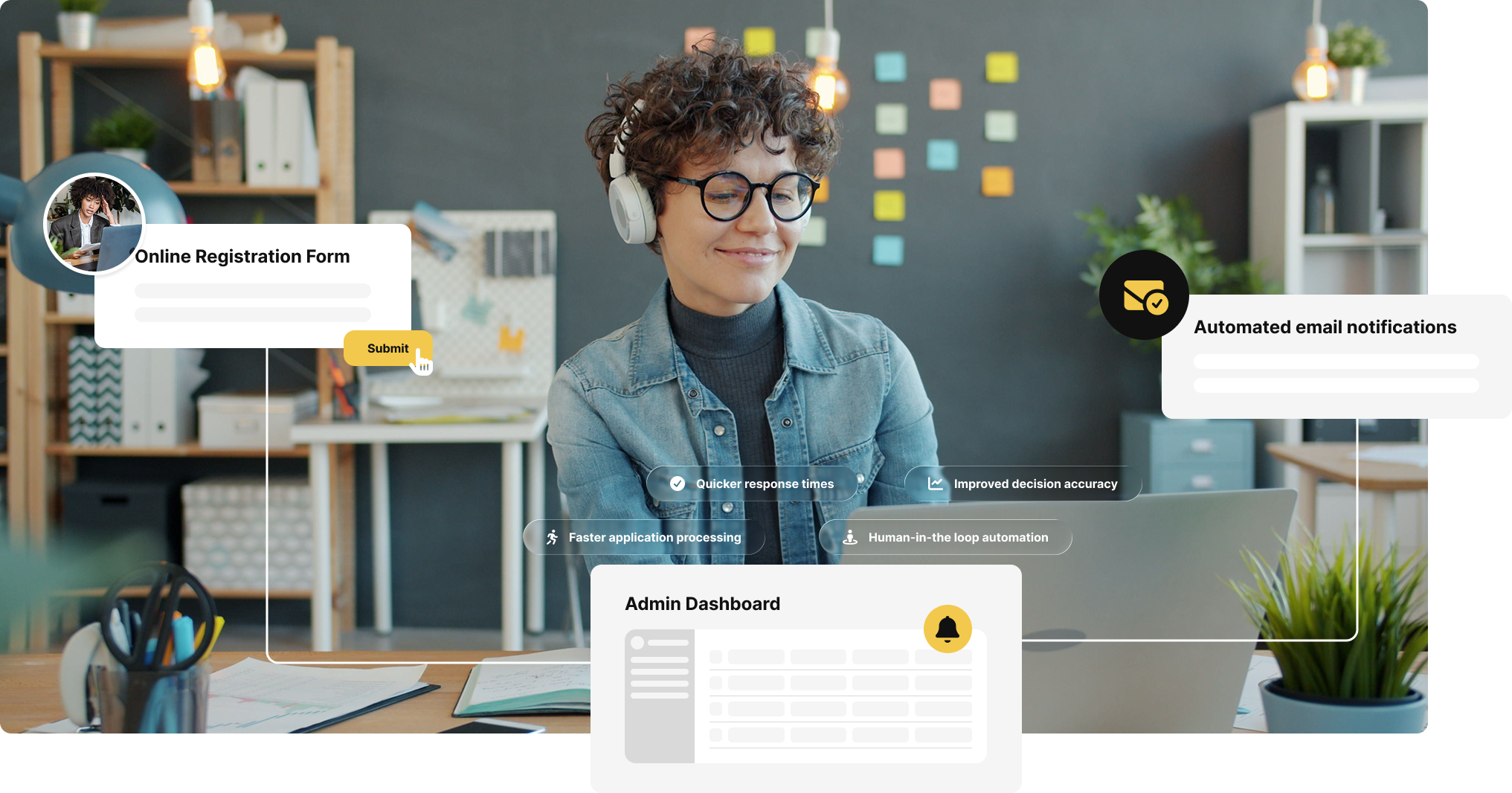
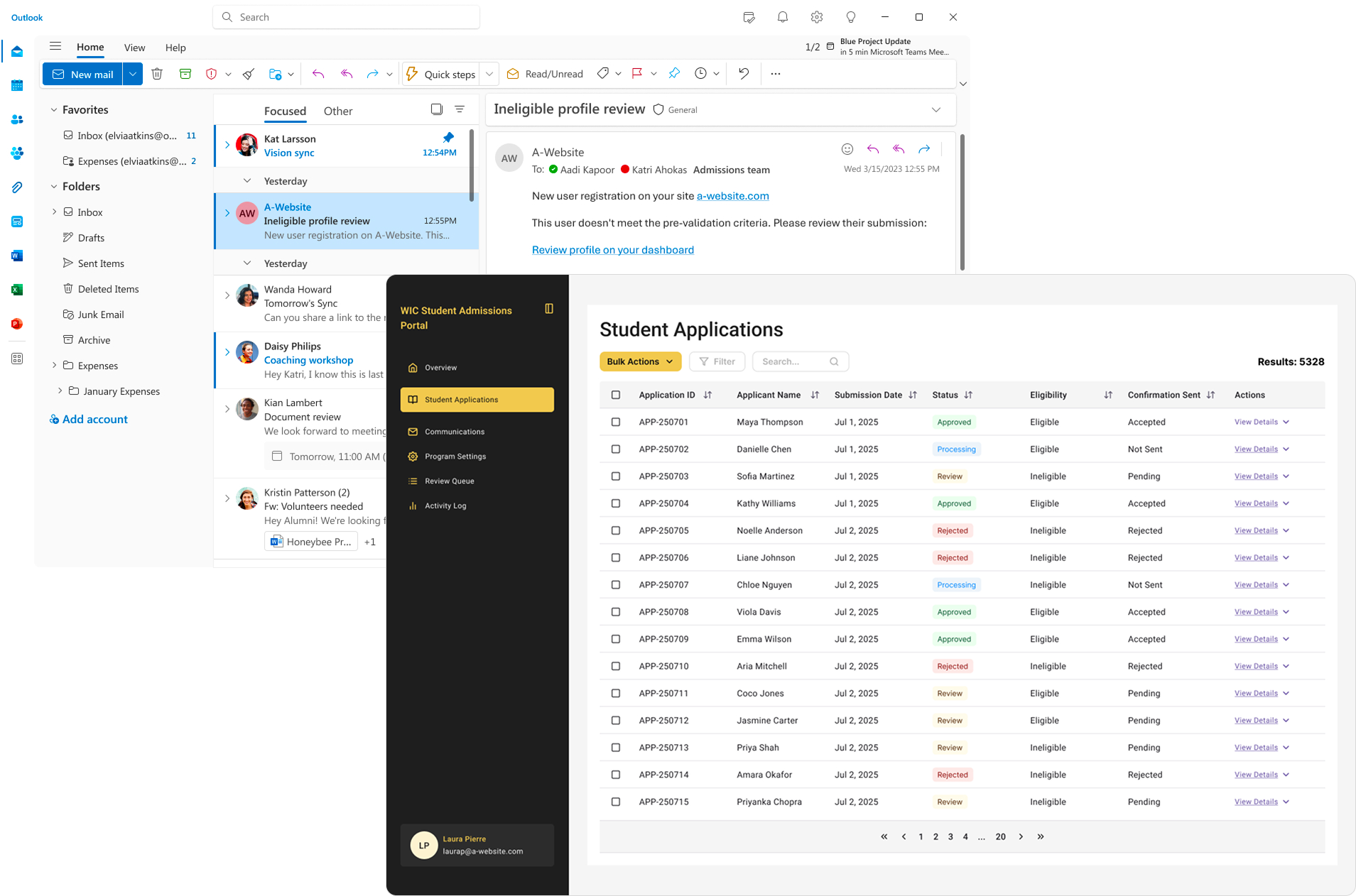
The updated system evaluates applications against eligibility criteria and instantly notifies admins when a new application is submitted. Each email includes a secure link that allows them to review the application and make the final decision through the dashboard.
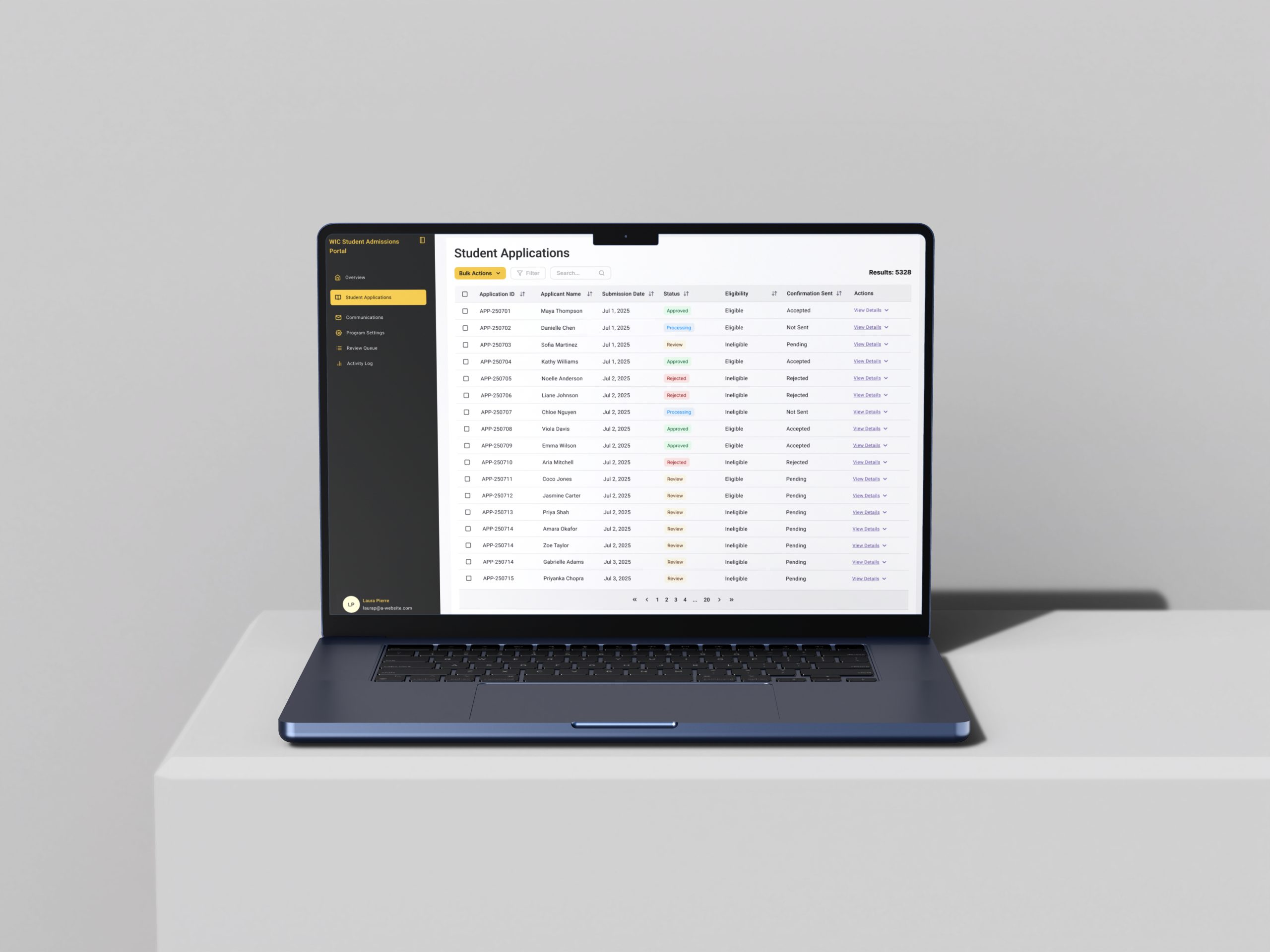
Admin dashboard mockup

Better application management

Instead of having data scattered across multiple different tools, we created a dashboard that consolidates everything so that the program admins can see and manage all student applications in one place. This has considerably improved application tracking and reduced data loss.
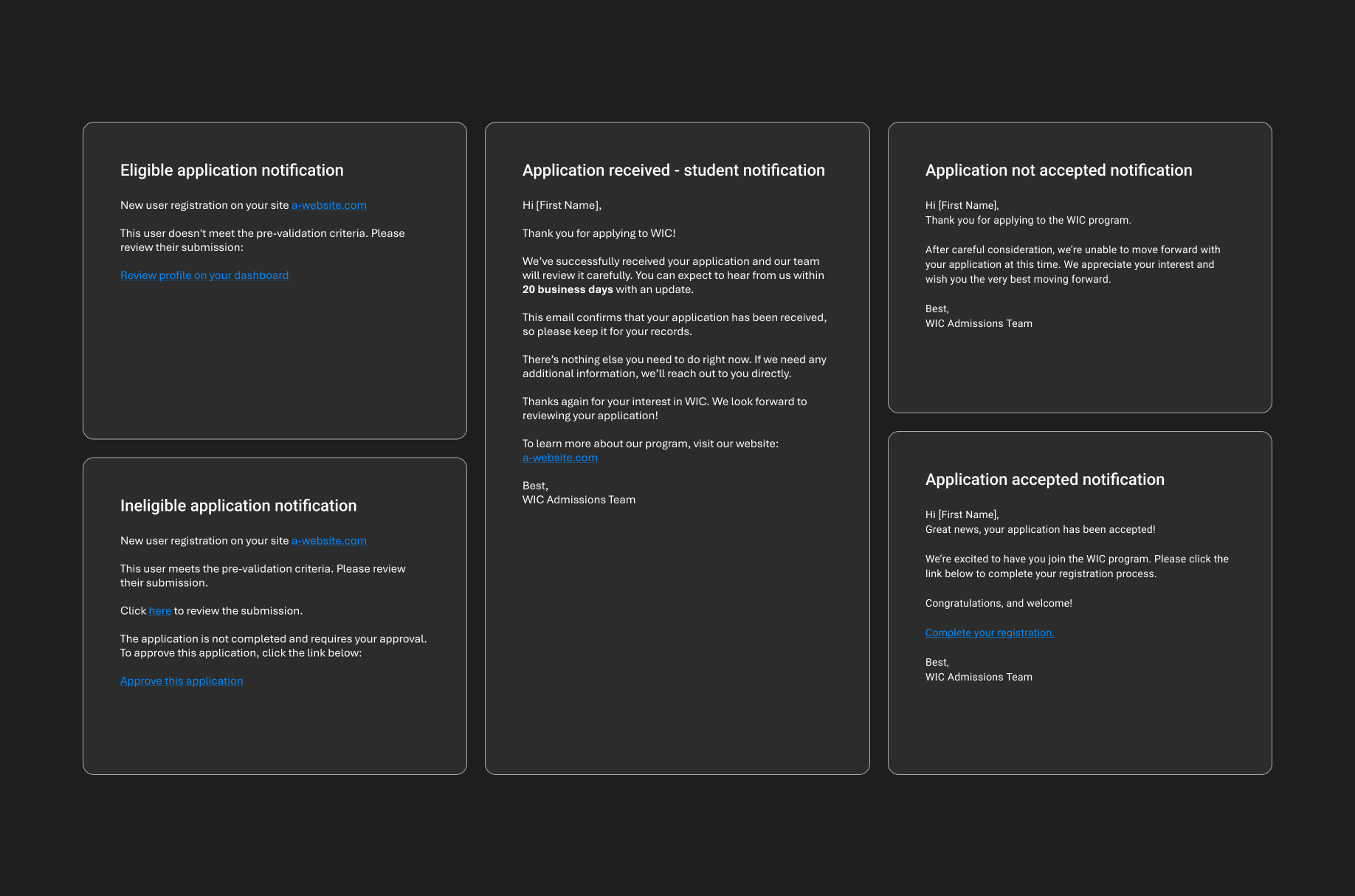
Email templates

Quicker response times

In addition to supporting automated application evaluation, the new system uses email templates so admins no longer have to manually write responses for every application. They simply click “approve” or “reject,” and the system automatically sends a customized email based on a pre-designed template.

Cleaner, more-structured submissions

The application flow discourages spam and low-effort submissions through built-in validation and submission controls. This keeps the application pool cleaner and reduces the time admins spend sorting through spam or incomplete submissions. Structured data also means admins can more easily review each application.
Important Metrics

Increased capacity without a proportional increase in administrative staff.

Metric Before After Impact analysis
Application completion time 45–60 minutes across multiple days 10–15 minutes in one session About 80% reduction: single-session completion reduces friction
Weekly status inquiries 200+ Less than 10 >95% reduction: immediate confirmation removes uncertainty around submission and reduces status-related follow-ups
Admin team size needed to process applications 10–15 people 1–2 people Over 85% less manpower, lowering operational cost
Admin time spent on each application ~1h40mins over several days–weeks ~5 minutes in one session ~95% faster
Application data management Multiple platforms, fragmented Centralized dashboard Centralized data makes applications easier to track and manage
Completed applications weekly <100/week 600+/week 6× increase: with a more streamlined process, there were fewer incomplete applications
Operational cost & scalability High admin load with limited scalability Lower admin load with higher application volume Greater scalability: Program growth no longer requires proportional admin growth
Registration system mockup
Privacy Settings
We use cookies to enhance your experience while using our website. If you are using our Services via a browser you can restrict, block or remove cookies through your web browser settings. We also use content and scripts from third parties that may use tracking technologies. You can selectively provide your consent below to allow such third party embeds. For complete information about the cookies we use, data we collect and how we process them, please check our Privacy Policy
Youtube
Consent to display content from - Youtube
Vimeo
Consent to display content from - Vimeo
Google Maps
Consent to display content from - Google